
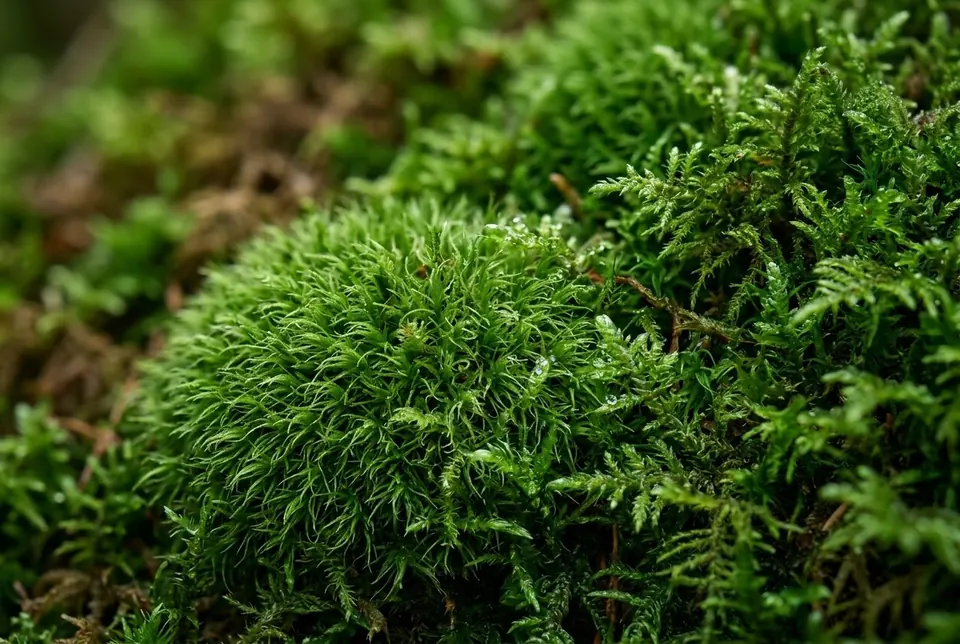
The desire to bring nature indoors (biophilic design) has become one of the strongest trends in modern architecture and interior design in recent years. Yet keeping living plants alive indoors brings serious operational challenges: insufficient daylight, poor ventilation, watering mistakes and the need for a regular gardener. This is exactly where preserved moss (stabilised moss) technology has made a revolution, bringing the elegance of nature into spaces with zero maintenance.
So what exactly is preserved moss? Is it a real plant or an artificial plastic imitation? How is it biologically preserved and why does it need no water? In this comprehensive guide we examine every scientific and aesthetic detail you might be curious about.
1. What Is Preserved Moss? Is It a Real Plant?
Let's first clear up the most common confusion: preserved moss is definitely not a plastic or synthetic imitation. It is a 100% real plant that grew in nature.
Harvested in a controlled manner from natural forest ecosystems and high mountain regions, these mosses are gathered at the peak of their growth and colour. They then undergo a special eco-friendly biological solution process, during which the water and sap inside the plant are evaporated and replaced with vegetable glycerine and natural salt minerals.
As a result, the plant falls into an "eternal sleep" at the cellular level. Its living metabolic activities (photosynthesis, respiration, growth) stop, but its suppleness, fresh structure and natural green colour are preserved. When you touch it, you don't feel a dry, brittle leaf, but a velvety, fresh and flexible texture — just like lying on the forest floor after the rain.
Summary: Preserved moss is 100% real mountain and forest moss that keeps its first-day freshness for 7 to 10 years without water, sunlight or soil, thanks to its sap being replaced with natural glycerine and ecological minerals.
2. How Is Moss Preserved? (The Biological Process)
The stabilisation process is an art form that requires great precision and an ecological chemical balance:
- Sustainable Harvesting: Moss is picked by hand, piece by piece, only from licensed areas, in a way that does not disrupt its natural regeneration rate. The root zone is never damaged.
- Cleaning & Purifying: Moss arriving from the forest is cleared of twig fragments, dust and soil.
- Biological Exchange in Glycerine Chambers: The moss is placed in special tanks with controlled temperature and humidity. A solution of plant-based glycerine, water and food-grade natural pigments penetrates the plant cells. This liquid permanently prevents the plant from drying out and shedding.
- Drying and Curing: The preserved moss is rested in sterile drying rooms. Excess moisture is removed and the texture is set.
3. Differences Between Preserved Moss and Living Moss
Many people may initially wonder, "Why not just get a living moss wall?" But the two approaches differ enormously in lifespan and maintenance:
| Feature | Preserved Moss (Eliva Moss) | Living Moss / Vertical Garden |
|---|---|---|
| Watering | No watering whatsoever. | Regular automatic irrigation or misting is mandatory. |
| Light Requirement | Needs no daylight or photosynthesis. Thrives even in a dark room. | At least 8–10 hours of special grow light per day is essential. |
| Plumbing Requirement | Zero plumbing. Hangs on the wall like a painting. | Requires water supply, electricity and drainage pipes. |
| Insects & Bacteria | Biologically inert, so it harbours no pests. | High risk of insect infestation due to moisture and soil. |
| Lifespan & Maintenance Cost | Keeps its form for 7–10 years with zero maintenance costs. | Ongoing costs for a gardener, fertiliser and replacing failing plants. |
4. Differences Between Preserved Moss and Plastic Artificial Moss
Plastic imitations may look green from a distance, but up close their artificial sheen, chemical plastic smell and stiff fake texture create a cheap impression in luxury spaces. What's more, because they generate static electricity, they constantly attract dust and are quite hard to clean.
Eliva Moss preserved moss, by contrast, lets you feel real nature from the moment you touch it. Its organic fibres absorb light beautifully, its antistatic structure repels dust, and it gives your space the identity of an editorial art gallery.
5. Benefits of Preserved Moss in Interiors
Preserved moss designs don't just offer a visual feast; they contribute directly to how a space functions:
- Acoustic Insulation: The spongy, multi-layered fibre structure of moss scatters and absorbs sound waves. It reduces echo by up to 30%, especially in modern homes and offices with lots of hard marble and glass surfaces.
- Hypoallergenic and Safe: It releases no pollen and contains no toxic substances. Completely safe for children and pets.
- A Natural Humidity Indicator: Preserved moss is sensitive to ambient humidity. At ideal room humidity (40–70%) it is wonderfully soft. If your room gets too dry, its texture stiffens slightly to tell you the air is dry; once humidity balances out, it turns velvety again.
Take a look at our handmade, brass-framed Preserved Moss Panel and our three-dimensional Pillow Moss Art designs in our collection.
6. Moss Walls in Commercial Spaces
Corporate headquarters, hotel lobbies and prestigious clinics are rapidly turning to preserved moss architecture to eliminate the leakage and dieback risks of traditional vertical gardens.
To explore in detail our turnkey projects for commercial spaces and their acoustic benefits, visit our Corporate Moss Wall Projects page.
Conclusion: Nature at Its Most Elegant, in Your Space
Preserved moss is a unique design material that combines the calming green texture nature has refined over millions of years with the practical needs of modern life. If you want to invite greenery that brings peace every time you look at it — with no watering hassle and no fear of fading — the Eliva Moss collection is made for you.